
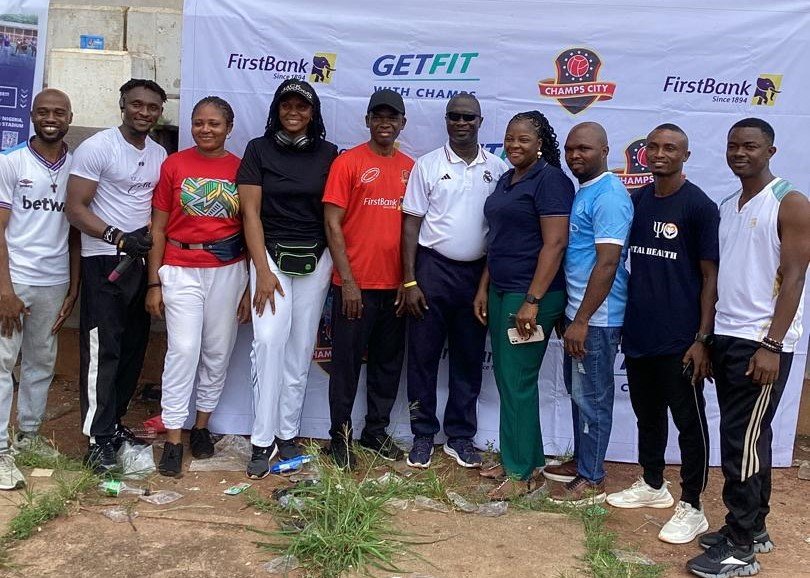
Community Engagement: What Makes Champs City Different
The huge socio-economic impact of football in particular, and sports in general, on communities across the world is well established. A closer look reveals the critical role individual professional sports clubs play within their host communities and, in some cases, beyond their borders. However, in Africa, the story is different. The impact of most professional sports clubs on their host communities could arguably be considered non-existent. The key question, therefore, is WHY?
This question lies at the heart of a conversation between Odinaka Iloh, President of Champs City, and Waltermary Ayogu and Uchechi Ogu of the Postgraduate School, Department of Psychology, University of Nigeria, Nsukka.
Tell us more about the initiative, GETFIT WITH CHAMPS?
You know, almost everywhere you see people engaging in sports in Nigeria and across Africa, the focus is largely on the games themselves. But for us, sports is more than just a game. We believe sports is an instrument for community engagement, local and international integration, friendship and the expression of those other emotions that make us human.
Our vision as a club is “to speak to humanity and inspire the world through sports.” As you can see, we are here today for GETFIT WITH CHAMPS, our community-focused health and wellness initiative. Today, we are not talking about football; we are talking about people’s health and wellness, as well as social engagement. These are all in line with our vision.
Therefore, partnering with the Department of Psychology is a natural fit for us as a club. Our relationship with the department actually began quite serendipitously through an encounter I had with one of your colleagues, Dr JohnBosco Chukwuorji.
We were travelling, and in the course of several conversations, I asked him, “Do you offer Sports Psychology at the University of Nigeria, Nsukka?” He said no, and I responded, “Why don’t you start Sports Psychology, then? We can provide a platform for your people. After completing their academic work at the university, they can work with us and complement their academic knowledge with practical experience.”
We believe that sport, even as a game, is largely a mental exercise. It is your brain that gives instructions to your body. So, if your brain is not functioning at its best, it may send the wrong instructions to your body. That is why a partnership with your department is such a natural fit for us.
Also, I know that people in this community are exposed to different forms of pressure, and, unfortunately, there is still a stigma surrounding mental health. When you mention mental health, people immediately think of madness. Therefore, our community engagement programme, GETFIT WITH CHAMPS, offers us an opportunity to demystify mental health through sports.
As people exercise, sweat and smile, they begin to appreciate what mental health and well-being are all about. Even if this is the only thing we achieve here today through our partnership with your department, it is enough for us.
I am happy that the programme has turned out well, and I believe this is the first of many more to come.
By the way, we are keen on strengthening our partnership with the Department of Psychology. In the coming years, we expect some of your best students to come on board, acquire practical industry experience and contribute to the growth of Champs City and the advancement of the entire sports sector.
We are not building Champs City as a conventional football club. I doubt whether clubs like Rangers and Enyimba are investing in this kind of community engagement in the way we are.
Another positive outcome of today’s programme is that many more people now know about Champs City.
We observed that people attended GETFIT WITH CHAMPS for different reasons. For anyone considering attending the next edition, what should their real motivation be?
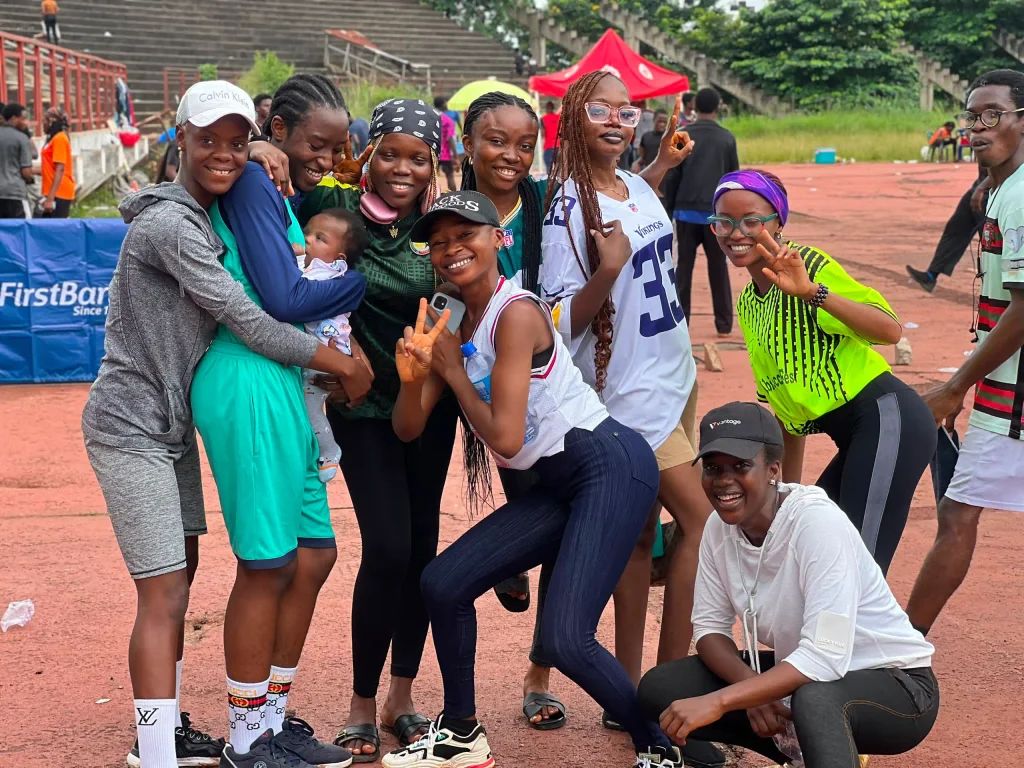
It is very simple and straightforward. These people are members of our society, and you cannot separate people’s behaviour from the way society is structured. Ours is a society that largely rewards things that should not necessarily be rewarded.
Today, we are witnessing this initiative for the first time in this community. It is the first of its kind, and I am sure that among those present, there are one, two, three, four, perhaps even twenty people who are here for the right reasons.
Now, consider the message they take away from this programme. If just one person with the right mindset speaks to three other people afterwards, and we have twenty such people, that translates to sixty people reached. By the time they attend the next edition, they will be bringing others who share similar values and interests.
For instance, people are increasingly consulting psychologists to address their challenges. If, in the future, a friend of someone who attended this programme experiences a similar challenge, what do you think will happen? They will make a referral. They now know where to go, and they can share their experience of how attending this programme helped them find a way forward.
For us, therefore, we are not particularly bothered about whether most people currently have the right mindset. We are interested in multiplying the few who already have the right mindset. And we cannot stop communicating what we are doing.
I am sure there is hardly anyone who will walk away from here saying, “Oh, I didn’t have fun.” People are having fun, engaging positively and learning from one another’s experiences. We are making a real impact, and we believe that the next edition will attract many more people for the right reasons.
We are hoping for a follow-up programme. What can we do to attract more people and achieve greater impact next time?
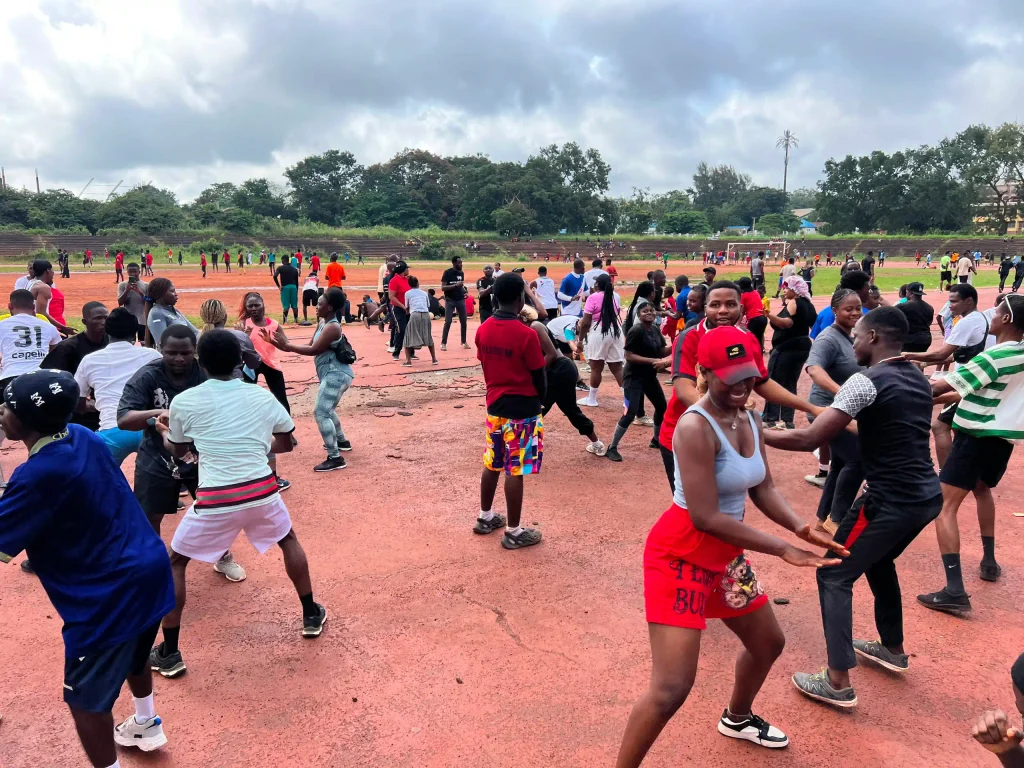
It has everything to do with marketing. Did everyone who needed to hear this message actually hear about it? If they did, how many times did they hear it? Was it once, twice, three times or several times? These are important questions.
Next time, we need to start the awareness campaign early enough to reach a much wider audience.
We are a club that believes strongly in partnerships, so we need to bring more partners on board. By the way, Champs City is among the few clubs in Nigeria today with a bank represented on its jersey. FirstBank, our lead partner and co-host of GETFIT WITH CHAMPS, was billed to be here today, but unfortunately, they could not participate. They were, however, present when we held the programme in Enugu.
Interestingly, we still have plans to take GETFIT WITH CHAMPS to three more locations before June 30, 2027.
Wherever we decide to go next, we hope your department will be ready to join us. The benefits of this partnership are significant, including for your profession. You find greater fulfilment when people understand what you do, rather than when you introduce yourself as a psychologist and people look at you and ask, “What do psychologists do?”
In fact, I recently searched for universities in Nigeria where people can study Sports Psychology at the master’s level. What I found was quite interesting. While some faculties, such as Education and Human Kinetics, offer postgraduate programmes in Sports Psychology, I could not find any Psychology Department in a Nigerian university offering a master’s degree in the discipline.
This is one of the opportunities our partnership with your department presents. We believe it can open new doors for academic collaboration, practical exposure and the development of Sports Psychology as a specialised field in Nigeria.
Beyond GETFIT WITH CHAMPS, what is your long-term vision for the role Champs City should play in its host community and the wider Nigerian sports ecosystem?
Our vision is to build Champs City into more than just a football club. We want to build an institution that demonstrates what sports can achieve when they are deliberately deployed as an instrument for human and community development.
As I have always said, our vision is to speak to humanity and inspire the world through sports. For us, that vision must go beyond the pitch. We want to be a club that people can identify with, not just because of the football we play, but also because of the positive impact we make in their lives and communities.
Ultimately, we want to build a model that other clubs can learn from and, hopefully, replicate.
Imagine a Nigerian sports ecosystem where clubs are not judged only by their trophies, league positions or financial strength, but also by the lives they touch, the opportunities they create and the communities they help to develop.
That is the kind of legacy we want Champs City to build. And we believe we can achieve this, one initiative, one partnership and one community at a time.


